
Build It Right from the Ground Up: What to Know Before Designing Your Pole Barn
- Beth Garber
- Jul 16, 2025
- 4 min read
Designing a pole barn isn’t something most folks do every day— but it’s something we do all the time. At VWC Construction, we’ve helped build everything from basic hay storage to full-scale garages and barndominiums across southern and central Colorado. And with each new project, our goal is the same: to make the process smooth, clear, and tailored to you.
Whether you need shelter for livestock, a custom shop, or extra space for hobbies and gear, here’s a look at what goes into a great pole barn—and how to set yourself up for success from the start.
1. What’s the Plan for Your Pole Barn?
Before we talk numbers or materials, we always start with one big question: What are you going to use this building for?
That simple answer shapes everything—your layout, square footage, wall height, and whether or not we should prep for plumbing, insulation, or future expansion.
Want to see how others have done it? Browse our past projects here »
Common Uses We Build For:
Agricultural storage (tractors, hay, feed)
Garages for recreational vehicles
Hobby workshops
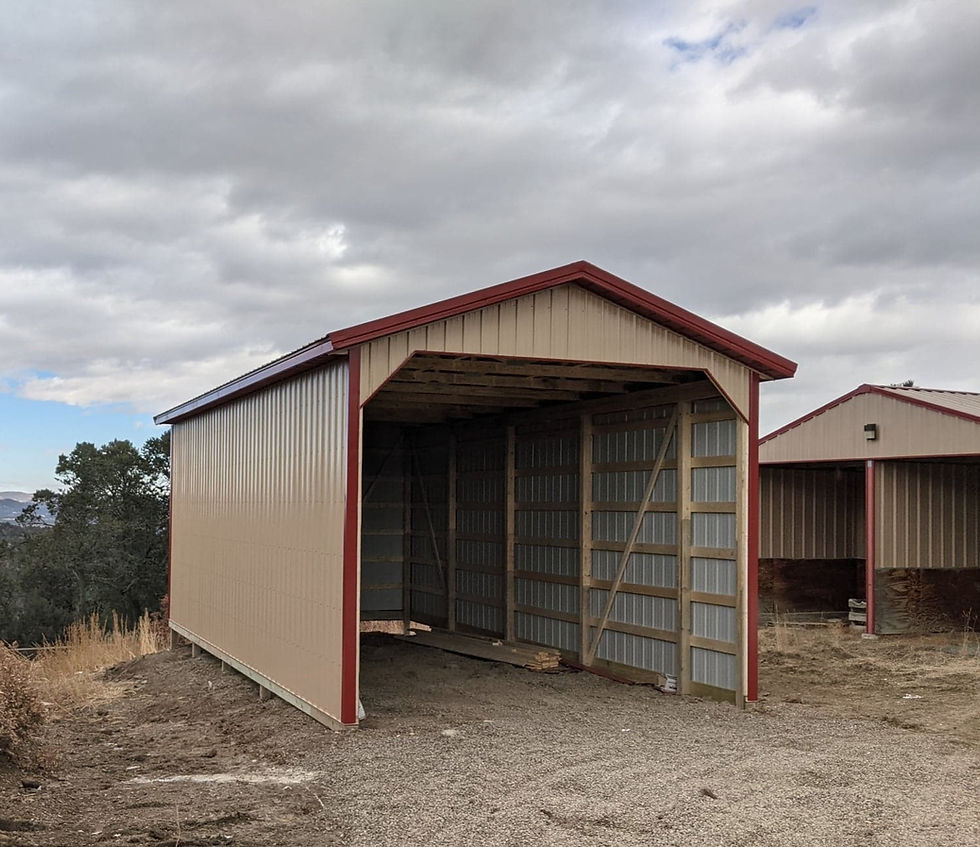
Horse barns or loafing sheds
Barndominiums (yep—we can do that too)
💡Pro Tip: Leave yourself room to grow. Even if you don’t need it now, adding space for an office, wash bay, or extra storage later is a whole lot easier when it’s part of the original plan.

2. How Big Should Your Barn Be?
Once we know the purpose, we can start figuring out size. Pole buildings are incredibly versatile—we build wall heights from 10’ up to 24’, and there’s really no limit on length. Need a wide open interior with no support posts? We’ve got that covered.
For example, a horse arena often calls for 80' x 120' with at least 16' ceilings and wide doors for horse-and-rider access. But your garage or hay barn might only need a third of that size.
👉 Still unsure? Check out our FAQ on choosing the right size barn »

3. Budgeting: What Costs to Expect (and Plan For)
Budgets vary based on use, size, and finish—but there are a few key cost factors that apply to most builds:
Site prep – Will we need to level, grade, or clear the land?
Permitting – We handle this for you, but fees vary by location.
Finishing work – Concrete, electrical, insulation, and interior options can all add to your investment.
Custom features – Think weathervanes, cupolas, Dutch doors, or horse stalls. These can make your building more functional—and more personal.
💬 Need help mapping out a realistic budget? Just contact us and we’ll walk through it together.

4. Function First: Your Layout Matters
A smart layout isn’t just about how things look—it’s about how they work day-to-day.
Here’s what we consider when helping you design your space:
Sun + wind exposure – Especially important for livestock comfort.
Access – Where do vehicles or trailers pull in? Where’s the water source?
Waste management – For barns with animals, good flow = clean stalls and happy animals.
Airflow + light – From cupolas to skylights, we’ll help you keep it fresh, bright, and energy-efficient.
Every building is different, and we design each one to suit your property, your needs, and your lifestyle. Want ideas? See how others designed theirs »

5. The Finishing Touches: Doors, Insulation, and More
There’s no one-size-fits-all when it comes to the details. Some features to think about include:
Doors: Overhead for a garage? Sliding for a livestock shelter? Hydraulic for equipment access?
Insulation: A must for living quarters, but also smart for workshops or storage in Colorado’s four-season climate.
Water & drainage: We'll make sure water flows where it’s supposed to—clean in, dirty out.
Interior options: Stalls, shelving, wash bays, tack rooms—we’ve done it all.

6. Pole Barn Styles We Love
Our barns aren’t just built to perform—they look sharp too. Some of our favorite roofline and layout styles:
Gable Roof – Classic and cost-effective.
Monitor Roof – Great for extra height or natural light.
Gambrel Roof – Traditional "barn look" with loft space.
Lean-to Additions – Perfect for extra shade or covered storage.
Custom Styles – If you can imagine it, we’ll help design it.
🎨 We offer a full palette of metal colors, trim combos, and siding styles to match your property’s aesthetic.

7. Materials & Foundation: What Holds It All Together
VWC buildings are made to stand the test of time. We use quality lumber, heavy-duty metal, and engineer every structure to Colorado standards for wind and snow loads.
Your foundation options depend on the use:
Dirt or gravel floors for animals or hay
Concrete pads for garages and shops
Post anchors in concrete footings for long-term stability
Learn more about post-frame construction and how it compares to traditional builds in our FAQ section »

8. Long-Term Care: Maintaining Your Pole Barn
Once your building is up, we’ll walk you through how to take care of it. Most of our customers are surprised by how low-maintenance post-frame buildings can be—but we still recommend checking:
Roof + gutters (especially after heavy snow)
Doors, windows, and seals
Pest activity
Water drainage
Interior structure, posts, and hardware

9. Why Choose VWC Construction?
We’re not just barn builders—we’re your neighbors. VWC is a family-owned company based in Canon City, and we’re proud to serve the Colorado communities we live in.
When you work with us, you get:
✔ Honest quotes and real timelines
✔ Permitting and engineering support
✔ Friendly communication throughout
✔ Structures built to last with minimal fuss
✔ Small-town values with professional service
We also offer flexible options, including carports, garages, barndominiums, dirt work, and more.

Let’s Build Something Together
If you’ve got a project in mind—or even just an idea scribbled on a napkin—we’d love to hear about it. At VWC Construction, we’re here to make building feel less stressful and a whole lot more exciting.
📞 Call or message us today to get started—or explore:
Because at the end of the day, quality and integrity still matter.

Comments